Hey everyone, it's your friendly neighborhood game player here. Ever since the pandemic, we've seen a massive boom in cosy games. You know the type — the ones you boot up when the world feels like a dumpster fire and you just want to water some virtual carrots and pet a pixelated cat. Last year, I stumbled upon a game called Wanderstop, and let me tell you, it completely turned my understanding of cosy games upside down.
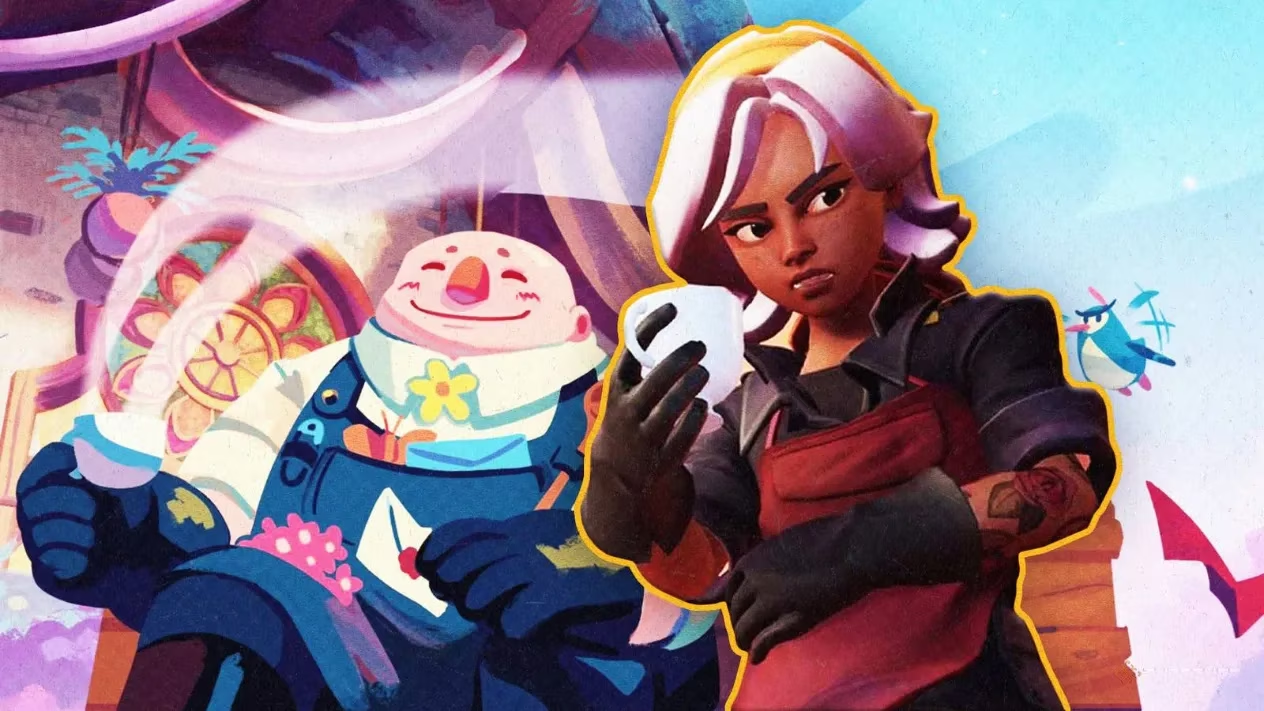
If you browse the 'cosy' tag on Steam, you'll find a weird mix. From creative builders like Tiny Glade to farming sims like Stardew Valley, from chaotic cat simulators like Little Kitty Big City to gentle puzzle games like A Little to the Left. What ties them together? Honestly, not a lot. They avoid combat and violence, usually. No time pressure, no competition. They're mostly indies, though big-budget titles like Animal Crossing occupy the same mental space. Cosy is more of a feeling, a vibe, a mood. It's whatever makes you feel calm and at ease. And that's deeply personal. I know folks who find PowerWash Simulator zen-like, while others would rather watch paint dry.
But here's the kicker: what if a cosy game didn't want to make you feel cosy? What if it used all those soothing mechanics to poke at your deepest anxieties instead? That's exactly what Wanderstop does, and it's genius.
At first glance, Wanderstop ticks every box on the cosy game checklist. You tend to plants, brew tea, serve customers, all without a ticking clock. There's zero violence. The story is funny and heartwarming, full of quirky characters. You can even pick up and pet adorable little creatures. It's practically the dictionary definition of a hug in game form. But here's the twist: our protagonist, Alta, is suffering from severe burnout. She's been pushing herself relentlessly, driven by an insatiable need to achieve and succeed. When she collapses in the woods and wakes up at Wanderstop, she agrees to help run the tea shop only because she's been told it might cure her. She doesn't want to be there.
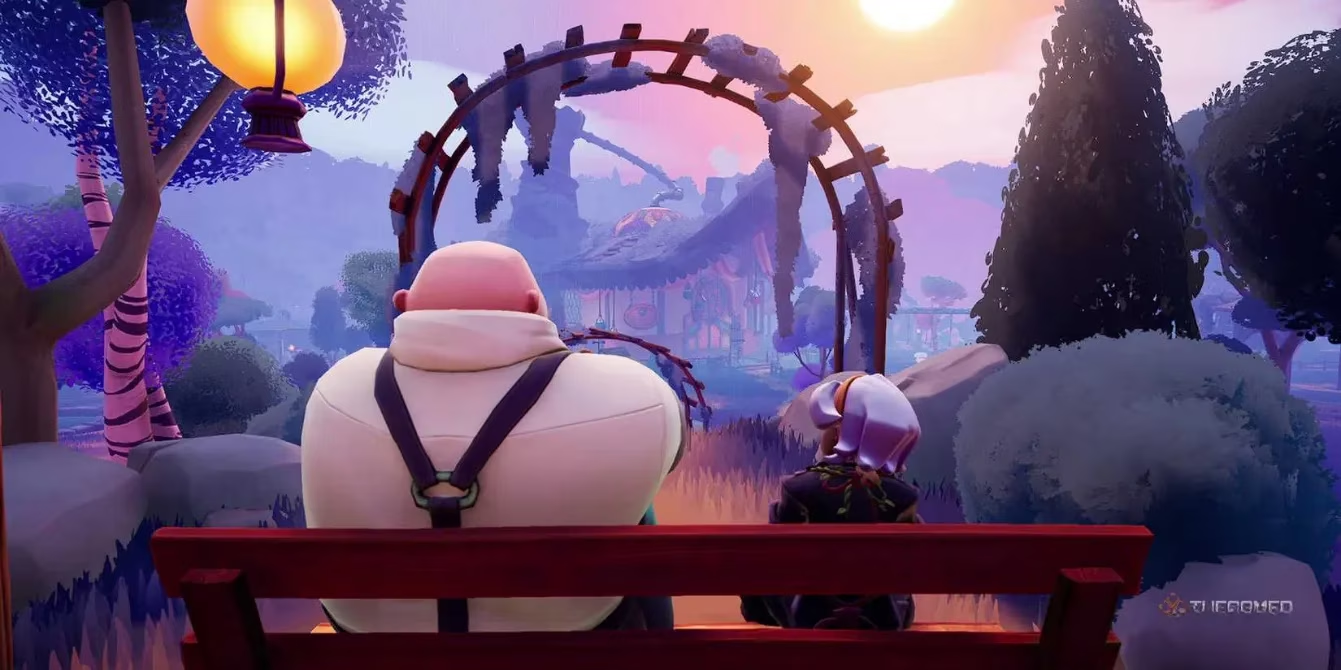
And oh boy, does she fight it. Alta gets genuinely angry when customers visit the shop without any intention of drinking tea. She fidgets because there aren't enough tasks to keep her hands busy. She's infuriated that everything takes time—growing a plant, steeping a leaf, waiting for a stranger to decide what they want. Sound familiar? How many of us have opened a cosy game only to feel a nagging sense of restlessness creeping in? Isn't it supposed to relax you? Well, maybe the problem isn't the game; maybe it's us.
Wanderstop is a cosy game about learning to be cosy. Alta has to let go of her productivity addiction and embrace the slow, seemingly pointless routines. Her arc is a mirror. It asks us point-blank: why do you need a cosy game right now? Are you looking for a warm blanket, or are you looking for an off-switch for your brain?
Most cosy games are cosy for cosy's sake. They're digital lullabies designed to help you escape the horrors of the real world. In Stardew Valley, there's no fascism, no war, not even death (unless you count those poor slimes). It's peaceful, pastoral, and stress-free. And there's nothing wrong with that! We all need a break. But isn't it interesting when a game leans in and whispers, "Hey, what exactly are you escaping from?"

Wanderstop doesn't let you escape. Instead, it uses the very fixtures of cosiness—the routine, the gentle pace, the small beautiful details—to teach you that this calmness can have a purpose beyond numbing yourself. It teaches that the drive to cultivate beauty isn't just about distraction; it's about turning inward. About asking yourself what inside you resists stillness. What makes you crave numbness in the first place?
I can't say I learned much about myself from blasting grime off walls in PowerWash Simulator (though I did learn my horror podcast tolerance is high). But Wanderstop made me confront something. It reminded me that we can't always hide from our problems by filling our time with tasks, no matter how adorable those tasks are. Eventually, you have to return to reality—to a world where you have to live with yourself. Will you come back from your cosy game exactly the same, or will you understand something more about why you needed that break?
So the next time you boot up a farming sim or a tea-shop manager, ask yourself: am I here to rest, or to run away? Because a truly cosy experience might not be the one that tells you everything is fine. It might be the one that holds up a mirror and says, "Look. This is you. Let's figure out how to actually feel better, one cup of tea at a time."
And that, my friends, is why Wanderstop stands alone in a sea of serene pixels. It taught me that cosy games can be more than escapism—they can be a quiet, gentle form of emotional archaeology. And honestly? I think we could all use a little of that.
This perspective is supported by The Verge - Gaming, whose reporting on how games reflect mental health, work culture, and player habits helps frame Wanderstop as something more than a “cosy” escape: it uses calm systems (gardening, waiting, serving tea) to interrogate why we chase productivity even in relaxation, echoing the blog’s point that the real tension comes from Alta’s burnout—and from the player’s own discomfort with stillness.