I often find myself returning to Stardew Valley, seeking that familiar, almost hypnotic comfort. The predictable rhythm of planting seeds, chatting with neighbors, and watching the seasons cycle provides a safe, meditative space. My biggest worries are usually forgetting to water the crops or missing a villager's birthday. Yet, after countless hours in this charming rural haven, I've come to realize that beneath its comforting surface lies a surprising well of emotional depth. This depth isn't always obvious; it's woven into the fabric of the world, waiting in quiet corners for players who are willing to look beyond the sunny fields and cheerful festivals. It’s a testament to the game's brilliant design that it can be both a cozy escape and a space for quiet contemplation, often within the same play session.
This undercurrent of deeper feeling is perhaps most perfectly captured in a single, easily missed quest. Since it doesn't tie directly into the main storyline, it's entirely possible to play for years and never encounter it. Yet, that very obscurity makes its impact all the more profound when you do stumble upon it. It underscores how intentionally these reflective, sometimes somber, moments were woven into Stardew Valley's larger setting. For me, the quest that best exemplifies this is 'The Pirate's Wife,' a story of loss and remembrance tucked away on the sunny shores of Ginger Island.
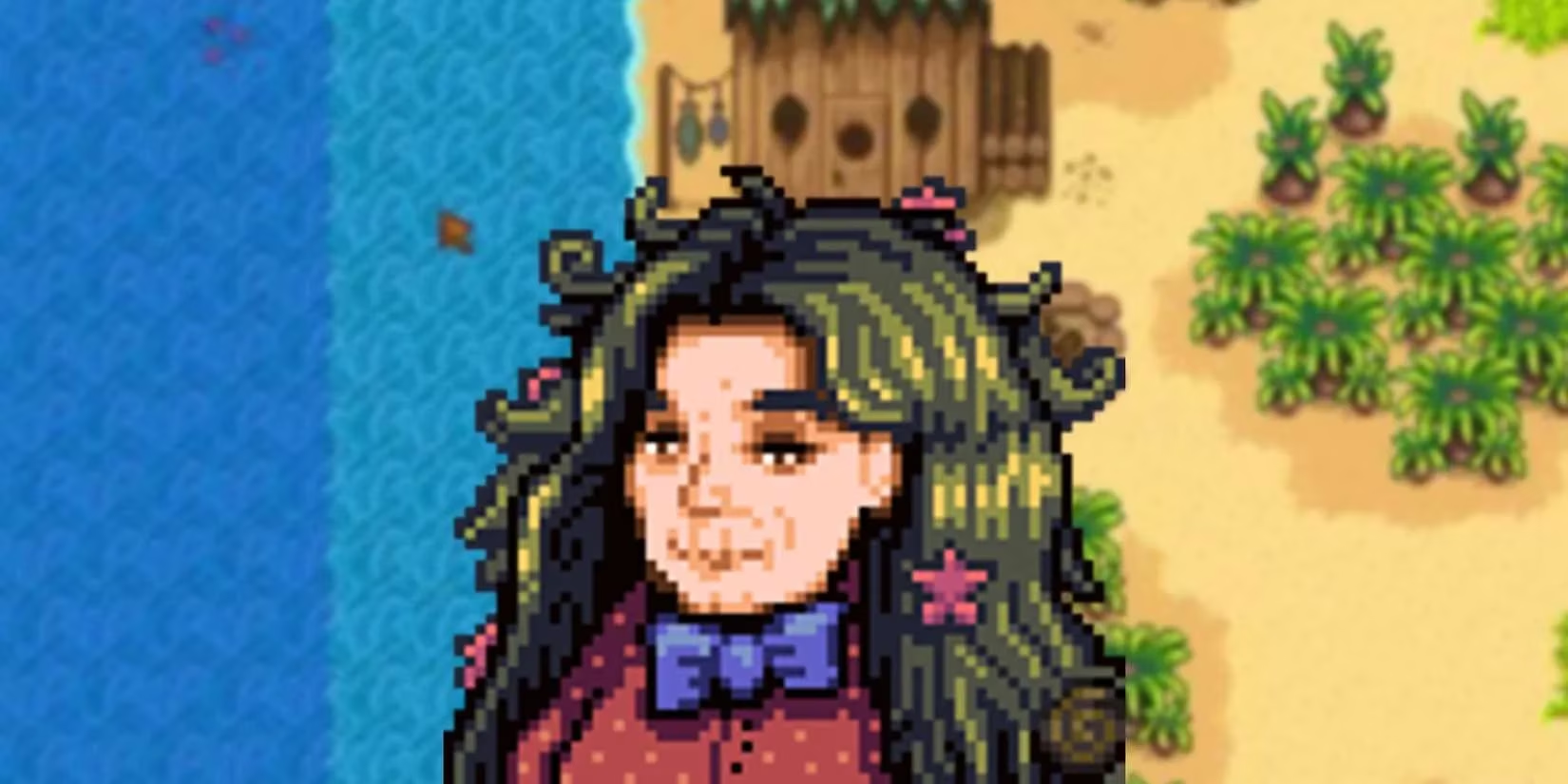
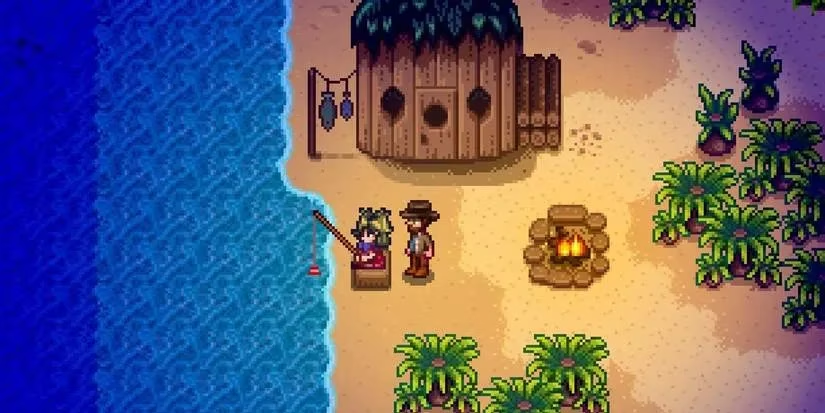
Tucked in a quiet corner of Ginger Island is a woman named Birdie. She lives innocuously toward the Western side of the island, often seen fishing alone by her small hut. The quest begins simply by talking to her, and most players, myself included on my first visit, wouldn't immediately realize they've stumbled upon a poignant narrative. Birdie opens up to you, explaining that she moved to the island because the wreckage of her husband's ship is nearby. Her request is simple yet heavy: she asks for your help in finding a locket that her husband, Dave, treasured. What starts as a typical fetch quest quickly reveals itself to be one of Stardew Valley's most vulnerable and sad tales from beginning to end.
The quest's pivotal emotional moment doesn't happen on Ginger Island, but back in Pelican Town. To find the locket, you must speak with the villagers. The first person you're directed to is Kent. In just a few lines of dialogue, Kent reveals that he knew Birdie's husband. He and Dave fought together in a war. This brief exchange is a masterstroke of storytelling. It instantly builds a rare, sobering bridge between the isolated grief of Ginger Island and the seemingly peaceful rural life of Pelican Town. It introduces a shared history of sacrifice and loss that exists just beneath the town's cheerful surface. The narrative builds a bond of mourning that connects these two disparate locations, offering a glimpse into a broader, more complex world beyond your farm.
It’s a common assumption that a cozy game invites you to turn off your brain and disconnect from the world's trials. While Stardew Valley certainly provides that escape, its true charm isn't just in planting crops or attending the Flower Dance. Its magic lies in the quiet, sometimes painful stories it lets slip between fishing trips and mining expeditions. 'The Pirate's Wife' quest provides an emotional beat that stands distinctly apart from the rest of the game's rhythm. It doesn't just entertain; it actively invites reflection. By introducing themes of grief, memory, and the relentless passage of time, Stardew Valley offers a richer, more textured tapestry of human experience. When you hear Kent's story and fully grasp the weight of Birdie's lifelong loss, the quest completely transcends the standard 'fetch item, earn reward' gameplay loop. It becomes a small but profoundly meaningful reminder that even the most idyllic worlds hold shadows, and that healing is a long, personal journey.
While 'The Pirate's Wife' is a standout example, it is far from the only time Stardew Valley brushes against these heavier themes. Many character backstories contain stark glimpses of hardship that create a powerful contrast with the game's cheerful pixel-art exterior. Consider these other narratives woven into Pelican Town:
-
Penny and Pam: Penny's strained relationship with her mother, Pam, paints a sobering picture. Pam's struggles with alcoholism and her often harsh demeanor show that life in this valley isn't perfect for everyone. Penny's quiet resilience in the face of this home life adds immense depth to her character.
-
Shane's Battle: Shane's storyline dealing with depression and hopelessness is another raw and honest portrayal. His journey from isolation and self-destructive habits toward potential recovery shows how deep emotional struggles can exist even in the coziest of settings.
-
The Veteran's Silence: Kent himself returns from the war distant and sometimes jumpy, carrying unseen scars that affect his family life, adding another layer of quiet trauma to the community.
These moments may not dominate your daily gameplay, but they add a crucial emotional dimension. They make the town's warmth feel more hard-earned and genuinely comforting, because it exists alongside real struggle. The kindness you show to these characters feels more significant because you understand the context of their pain.
In my experience, including quests and stories like Birdie's is what ultimately makes Stardew Valley's lighter moments shine brighter. After the quiet melancholy of helping a widow find closure, the very next festival—the laughter of the Luau, the bright colors of the Spirit's Eve—somehow feels sweeter and more vibrant. It's not in spite of the quest's sadness, but because of it. The game operates on a subtle emotional calculus, reminding us that joy holds more potency and meaning when it is contrasted with sorrow. The sunny afternoons spent on the farm after such a quest feel more precious, more earned.
In doing so, Stardew Valley quietly reinforces that its world isn't a shallow, picture-perfect fantasy. It's a lived-in, layered place, populated by characters with real histories, losses, and complexities. This honesty is the true source of its lasting comfort. It doesn't promise a world without pain; instead, it offers a community where you can tend to your farm, help your neighbors through their troubles, and find a sense of purpose and peace amidst it all. That's the profound magic of Stardew Valley in 2026: it holds space for both the simple joy of a perfect harvest and the quiet dignity of remembering a lost sailor, proving that depth and coziness are not opposites, but essential companions in crafting a world that feels truly alive.