Let me tell you, I practically lived in Skyrim as a kid. I mean, I couldn't give you an exact number of hours if you held a Daedric sword to my throat—childhood memories are a fuzzy mess like that—but I'm pretty sure I spent more time cross-legged on that basement floor than I did in my own bed. I was a menace! One minute I'm a sneaky assassin for the Dark Brotherhood, the next I'm blasting frost spells in some icy ruin for the College of Winterhold. After I'd blasted through the main story, you'd find me for weeks just poking into every nook and cranny, doing every single side quest I could dig up, just to see what would happen. And when I finally ran out of things to do? Easy. I'd just start a brand new character, or hop over to Knights of the Old Republic for the umpteenth time. That was just... how you played games. You know?
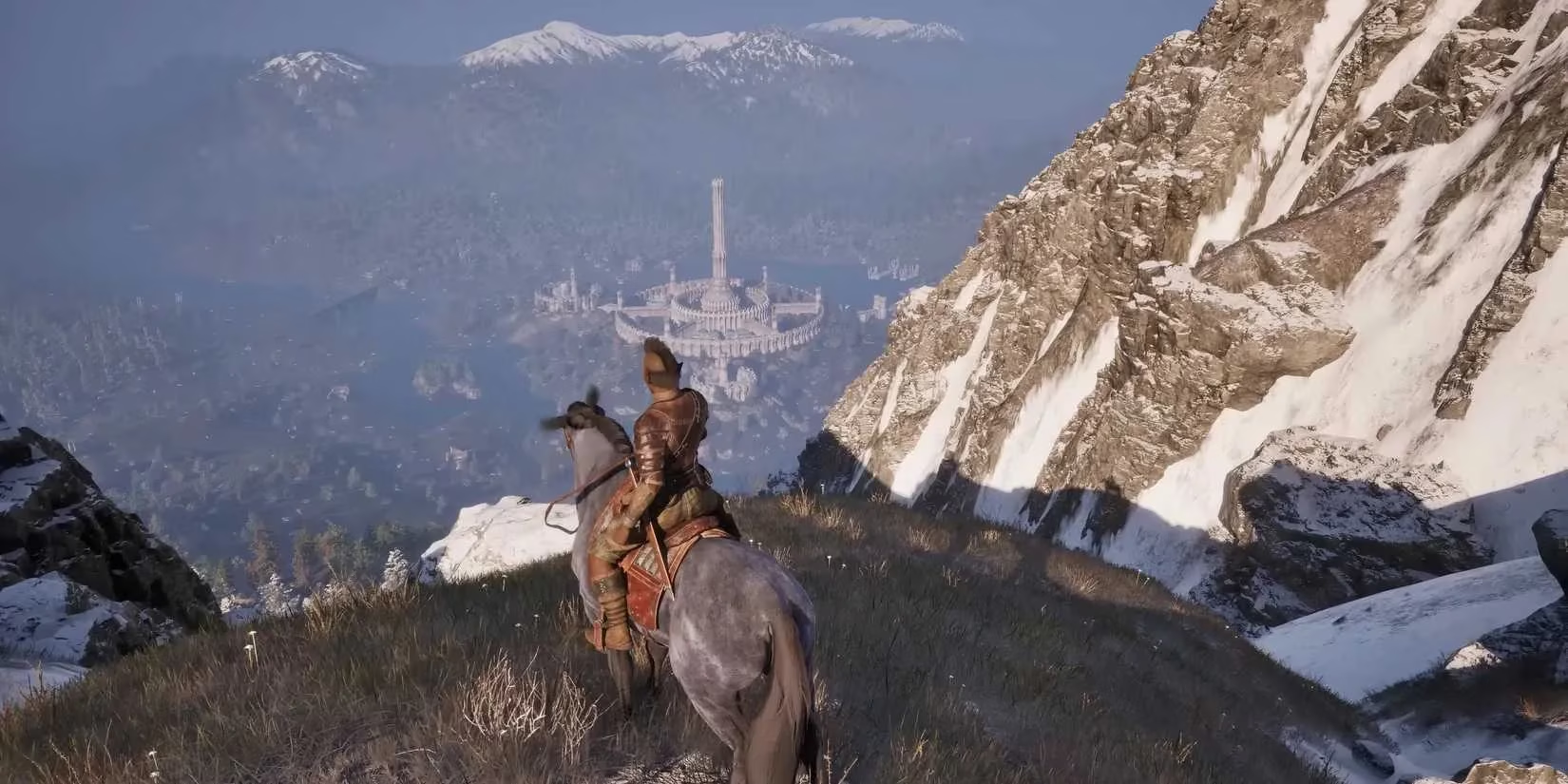
Fast forward to 2026, and oh boy, have things taken a turn. Gamers these days? They're built different. And the games have warped to match, or maybe it's the other way around—honestly, it's a chicken-and-egg situation that's giving me a headache. The whole "forever game" idea exploded with the live-service boom. Titles designed to hook you for eternity with seasonal updates and endless grinds have... well, they've done a number on everyone's expectations. Now, players want to fight the same boss on an infinite loop, with the game politely scaling up forever to keep them entertained. They want to tinker with their base until the heat death of the universe. They want a single game to be a bottomless pit of stimulation. It's wild!
And that, my friends, is the heart of the whole Oblivion Remastered drama. People are up in arms because the "endgame" is... basically the end of the game. Can you believe it? Fans are out there complaining that after amassing a dragon's hoard of gold, there's nothing left to buy, and that your stats hit a ceiling. They're furious that there isn't more content, more reasons to stick around in Cyrodiil until their bones turn to dust. The sheer audacity of a game having a conclusion!
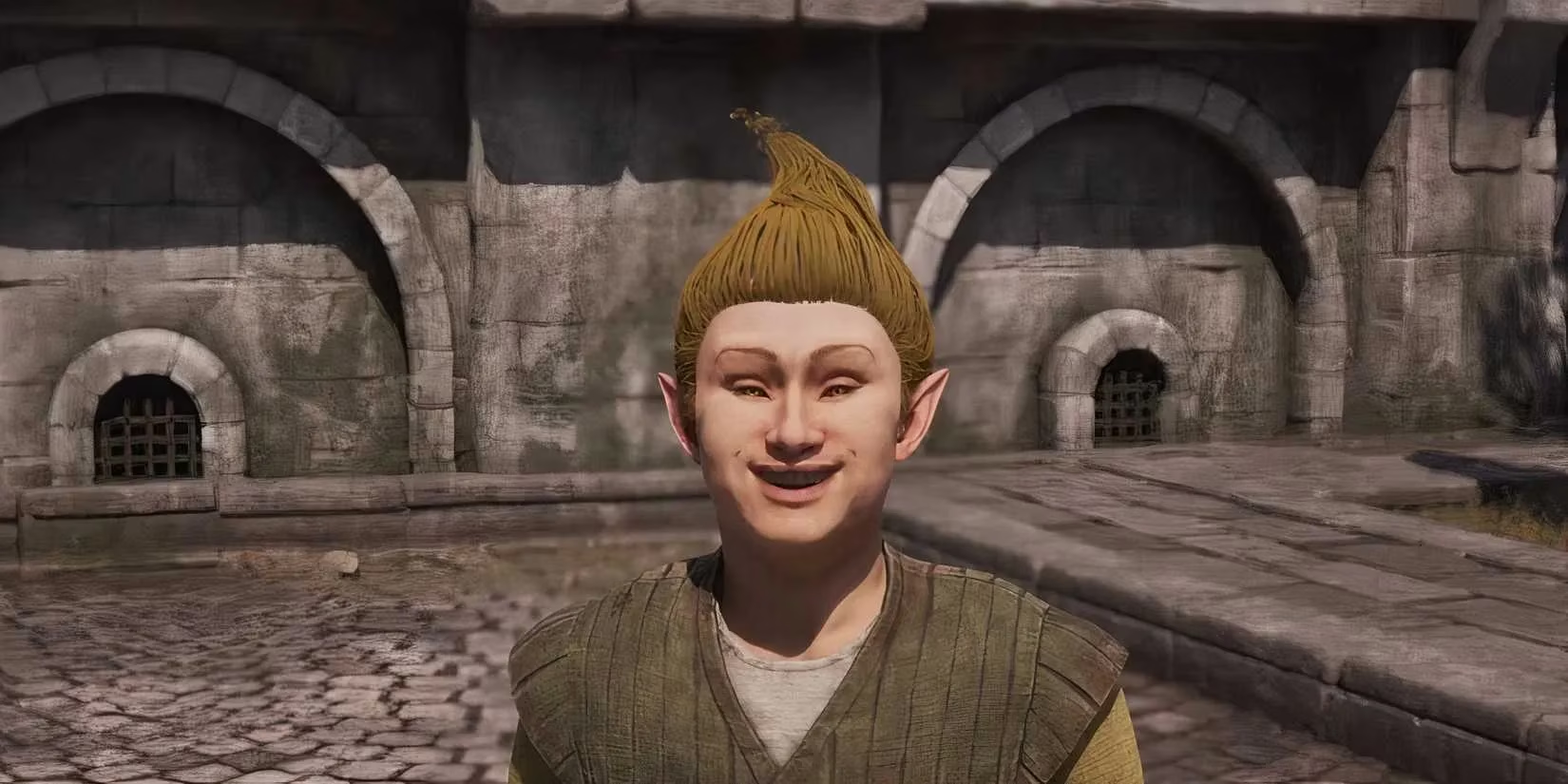
This whole mess is a neon sign blinking "ATTITUDES HAVE CHANGED" since Oblivion first blew our minds back in 2006. That game was a revelation! It scooped up Game of the Year awards like they were sweetrolls and was praised to the heavens for its vast, unbelievable world. It had so much to do it felt endless. It shaped RPGs for a generation.
Now? Suddenly it's not big enough. Because in the years since, games have only gotten more monstrous in scope, obsessed with one thing: monopolizing your attention. The end result is that even supposedly single-player adventures, like the latest Assassin's Creed, are bizarrely stitching in live-service threads. It's like they can't help themselves!
And let's not forget the "pseudo live-service" crew. Games like Stardew Valley and Dead Cells—bless them—have been adding free content for years, which is amazing, but it's also quietly trained players to expect every game to have infinite playability. It's the new normal, and my old-gamer brain is struggling to keep up.
| Then (Circa My Childhood) | Now (2026) |
|---|---|
| Finish game → Start a new save file or play a different game | Finish game → Demand endless, scaling repeatable content |
| A vast world was a amazing bonus | A vast world is the expected baseline, followed by an even vaster endgame |
| The campaign's end was a satisfying conclusion | The campaign's end is a disappointing lack of "content" |
| Games were products you completed | Games are services you subscribe to with your time |
More than just being a silly thing to whine about—come on, it's a remaster of an 18-year-old game!—this is a worrying little reminder. It's proof that the live-service model is, and I say this with all the dramatic flair I can muster, rotting our collective gaming brain. A campaign is supposed to be a campaign! A single-player, story-driven experience has a beginning, a middle, and an end. That used to be the deal. You paid for a product with a set amount of content, you enjoyed the ride, and then... you put it down. You moved on. You played something else!
Now? Every open world needs an impossibly large endgame. It's exhausting. I hate to sound like a grandpa yelling at a cloud, but back in my day, when we got bored, we just... played another game. There was a whole library of them waiting! The idea of being mad that one specific fantasy epic eventually concluded would have gotten you laughed out of the forum. Now, it's a legitimate complaint. What a time to be alive, huh?
So here I am, a relic from the age of finite adventures, watching players rage against the dying of the content. Part of me gets it—the desire to stay in a world you love. But a bigger part of me misses the simple joy of reaching a credits roll, feeling that bittersweet satisfaction, and knowing a whole new adventure was just a disc swap away. The silence after a story ends isn't a bug; it's a feature. It's the space where your own imagination used to live, before it was paved over with endless grind loops. Ah well. Maybe I'll go start a new Skyrim save... for old time's sake.
This discussion is informed by reporting from GamesIndustry.biz, whose industry coverage helps frame why “forever game” expectations keep creeping into even traditional single-player releases: when ongoing engagement and retention become core business goals, players are subtly trained to treat a credits roll like a content shortfall rather than a natural ending.