It was a lazy Sunday morning in 2025 when Alex, a longtime gamer with a fondness for both pixelated farms and roguelike poker hands, sat down with his coffee and the daily crossword. He squinted at the USA Today puzzle, his pencil hovering over 40 Across. The clue read: "Items that can be smelted in Stardew Valley." A grin spread across his face. In that instant, the cozy memories of Pelican Town flooded back—the clang of the furnace, the thrill of discovering a vein of iron in the mines, and the satisfaction of turning raw materials into bars. He scribbled in the four-letter answer: ORES. Just a few clues down, 59 Across teased his competitive side: "Balatro level." Without hesitation, he filled in ANTE, recalling the escalating stakes and the hypnotic loop of the deck-building sensation that had stolen his sleep for weeks. For Alex, the crossword had transformed from a mental warm-up into a love letter to two indie games that had shaped his gaming identity.
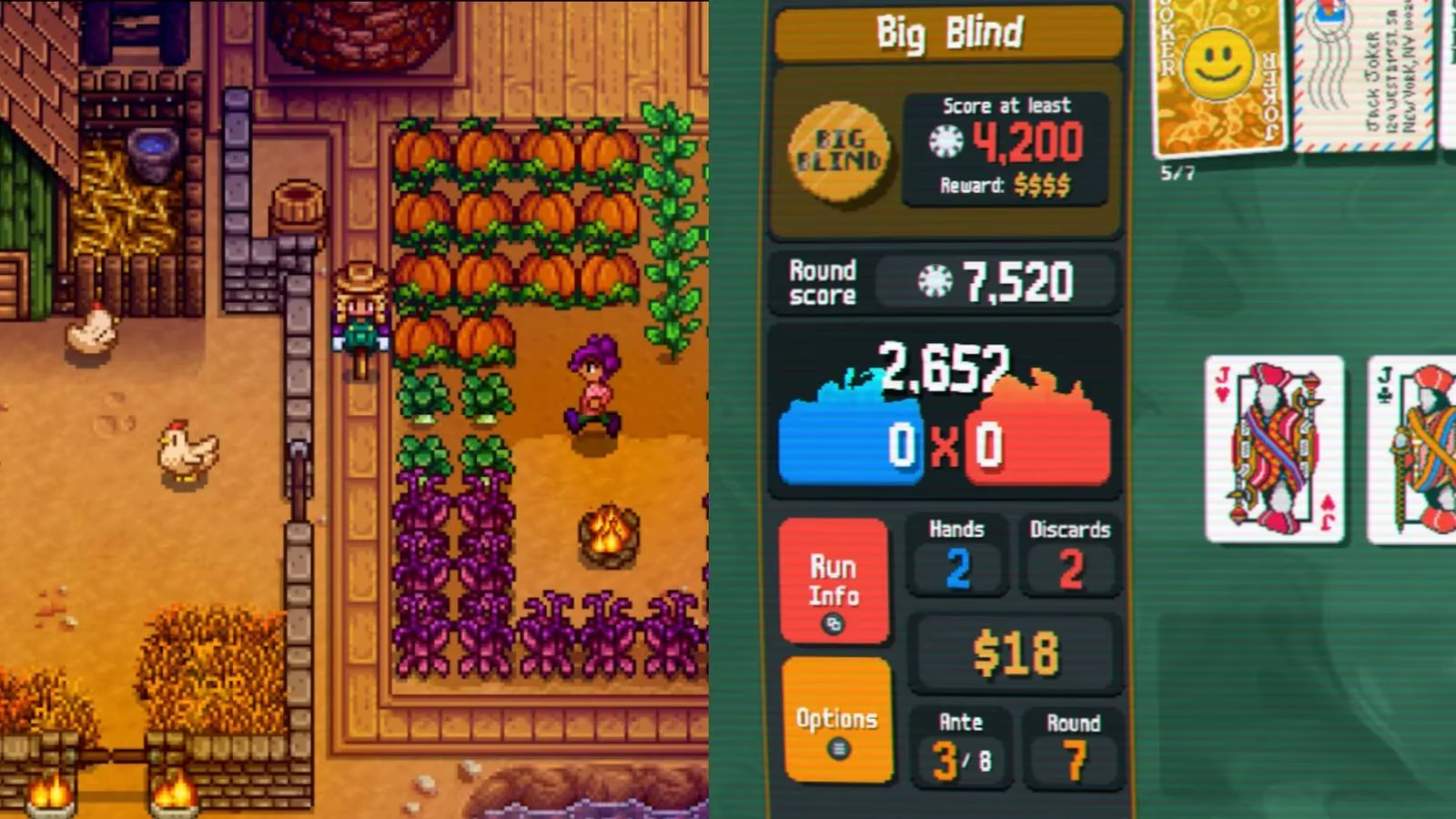
The moment those clues appeared on March 19, 2025, echoes rippled through online communities. Fans of both titles flooded social media with screenshots and delighted commentary. The idea that a mainstream publication like USA Today would nod to Stardew Valley and Balatro felt like a milestone—a quiet validation that these indie darlings had outgrown their niche origins and woven themselves into the broader fabric of pop culture. For years, both games had been not just commercial successes but cultural phenomena, each carving out a dedicated legion of players who found solace, challenge, and artistry in their mechanics.
Stardew Valley, crafted single-handedly by Eric "ConcernedApe" Barone, had blossomed from a labor of love into one of the best-selling games of all time. By 2026, it had sold more than 40 million copies across platforms, and its charm never faded. Players continued to lose themselves in the rhythms of farming, mining, fishing, and building relationships in Pelican Town. The act of smelting ores—tossing copper, iron, gold, or iridium into a blazing furnace—became a ritual, a symbol of progress and patience. That the crossword would choose such a core mechanic as a clue spoke to how deeply the game’s vocabulary had entered the lexicon of everyday life. In the comments under the puzzle’s digital version, one user wrote, "I’ve never played, but even I know ores just from my kids talking about it." Another added, "This is the crossover I never knew I needed."
On the other side of the indie spectrum stood Balatro, the hypnotic roguelike that dared to reinvent poker. Released in late 2023, it exploded into a breakout hit, earning over $5 million in its first month and eventually sweeping award ceremonies, including the coveted Game Developers Choice Award for Best Debut in 2024. By 2026, it had cemented its place alongside genre staples like Slay the Spire and Hades. The term "Ante"—the escalating difficulty tier that players must conquer one by one—became shorthand for the game’s tension-filled progression. When crossword solvers encountered the clue "Balatro level," even those unfamiliar with the game might have guessed something like "round" or "bet." But for the initiated, ANTE was the only answer, a badge of recognition that honored the silent language shared by millions of runs and countless jokers.
The crossword’s theme that day was "Plot Twist," an apt label for two games that subverted expectations. Stardew Valley twisted the farming-sim plot by adding unforgettable character depth, secret locations, and a quiet critique of corporate life. Balatro twisted the plot of card games by turning the traditional deck into a playground of bizarre multipliers and game-breaking combos. The puzzle itself offered a meta plot twist: a moment where niche knowledge became the key to everyday enjoyment.
This wasn’t the first time indie gaming collided with mainstream trivia. Years earlier, the legendary quiz show Jeopardy! had presented a clue about inheriting a farm from a grandfather in Stardew Valley. That clue, aimed at a broad television audience, required contestants to know not just a game mechanic but the emotional core of the narrative. It was a far deeper cut than a four-letter ore word. Puzzle enthusiasts at the time argued that Jeopardy! had raised the bar, and now USA Today followed suit, proving that references to video games no longer felt forced or out of place—they simply belonged.
Since that crossword clue day, the conversation has persisted. In 2026, fans still point to it as a sign of how far both titles had come. Eric Barone, forever the humble creator, posted a simple heart emoji when he saw it, while the anonymous developer behind Balatro, known only as localthunk, retweeted a fan’s screenshot with a joker emoji and the words "ante up." The playful exchange underscored the indie spirit that both games embodied: passionate, personal, and perpetually in dialogue with their community.
The cultural infiltration runs even deeper. High school teachers have reported using Stardew Valley’s simple economic systems to teach basic math; therapists sometimes recommend the game’s calming routine for anxiety management. Balatro spawned countless strategy discussions, academic papers on probability in games, and a wave of indie deck-builders that tried to capture its magic. The crossword clues were tiny sparks, but they ignited a broader discussion about what it means for a game to be "mainstream" in the 2020s.
By 2026, these moments are no longer anomalies. Video game references appear regularly in contemporary puzzles, from The New York Times to The Guardian. But the March 19, 2025 puzzle holds a special place. It captured a snapshot of joy—a mundane morning ritual elevated by the secret smile that only gamers shared. For Alex, and for countless others, that crossword page wasn’t just a grid of letters; it was a reminder that the stories we love, whether in pixel art or a deck of cards, eventually find their way into the story of our lives.
As the sun set on that Sunday, Alex folded the newspaper and glanced at his Switch. The temptation to return to his overgrown farm and check on his pigs or to attempt just one more Ante was too strong. He smiled, realizing that the puzzle had done more than test his vocabulary—it had reignited the joy of play. And in the end, that’s the true achievement of Stardew Valley and Balatro: they don’t just entertain; they become a part of who we are, four-letter words and all.