Let’s be real here—the gaming world has a serious habit of slapping the "like Skyrim" label on just about any fantasy game that drops, and honestly, it’s getting out of hand. I’ve watched this trend go from mildly annoying to straight-up damaging over the past few years, and I gotta say, it’s time we found a better way to talk about new releases. While some comparisons do make sense (shoutout to Avowed for actually sharing DNA with Bethesda’s titan), most of them are as flimsy as a level 1 character trying to fight a dragon.
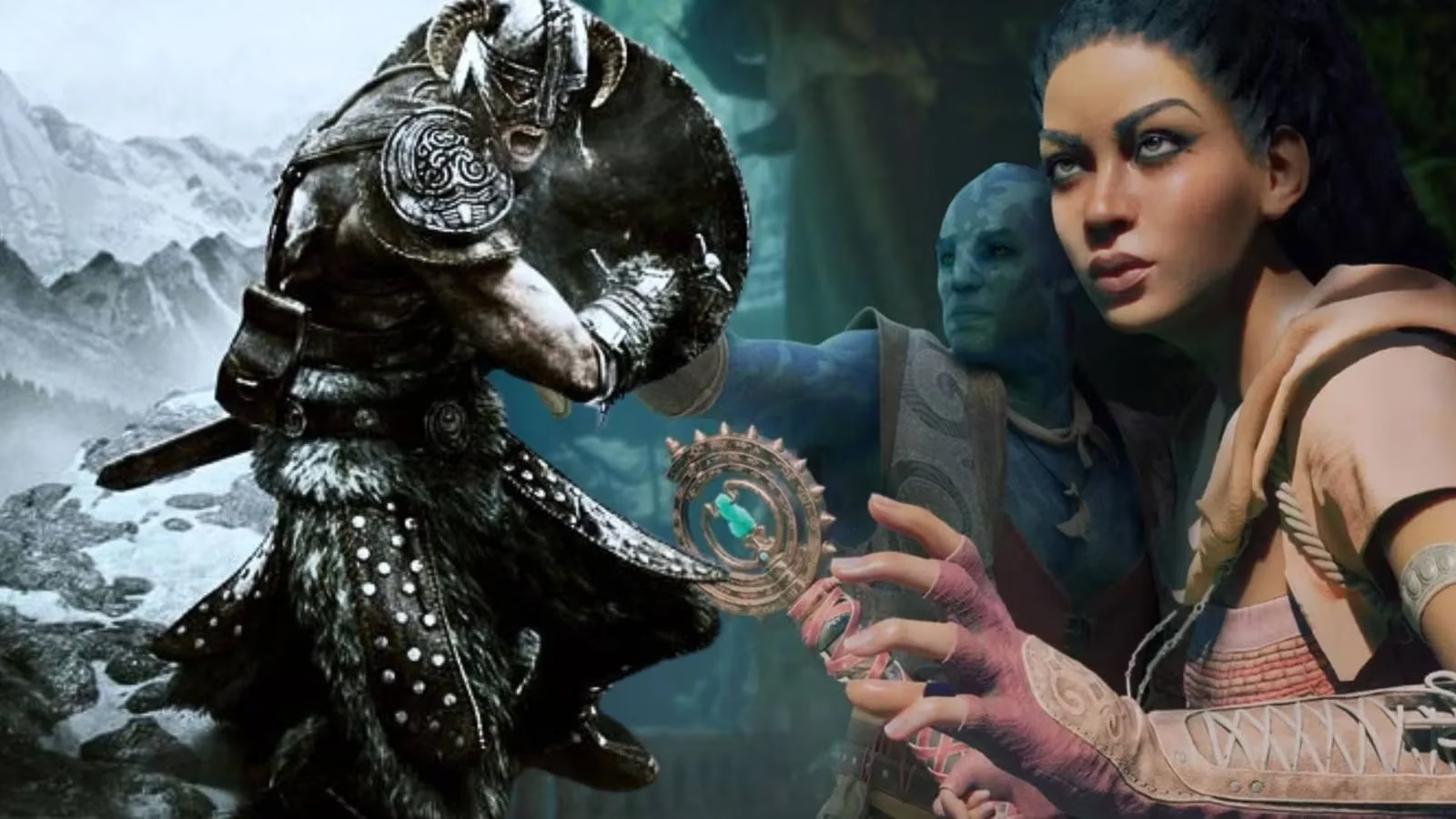
Now don’t get me wrong—I’m not saying all Skyrim comparisons are unfair. When I first heard that Obsidian was making their own take on that kind of experience, I got excited. Both Avowed and Skyrim are action RPGs set in vibrant fantasy worlds, they let you swap between first and third person, and the combat has that same kinetic snap. I can totally see why someone would draw the line. But here’s the thing: as soon as you start calling every medieval-themed game “Skyrim meets X,” the term loses all meaning faster than a stealth archer builds into a meme.
Take the upcoming World of Anterra and City Tales - Medieval Era, for example. Both got slapped with the “Skyrim meets Stardew Valley” sticker, even though they’re basically two completely different games wearing the same costume at a party. World of Anterra is a pixel-art RPG—okay, I see the Stardew link in the visuals—but its combat is turn-based. When someone whispers “Skyrim-like” in my ear, I’m picturing real-time shouts and weapon bashing, not politely queueing up actions with a party. And City Tales? That’s a city-builder with resource management. If that’s Skyrim, then I’m the Dragonborn’s distant uncle who just likes to garden. It’s confusing, and it sets up innocent players for a faceplant of disappointment.
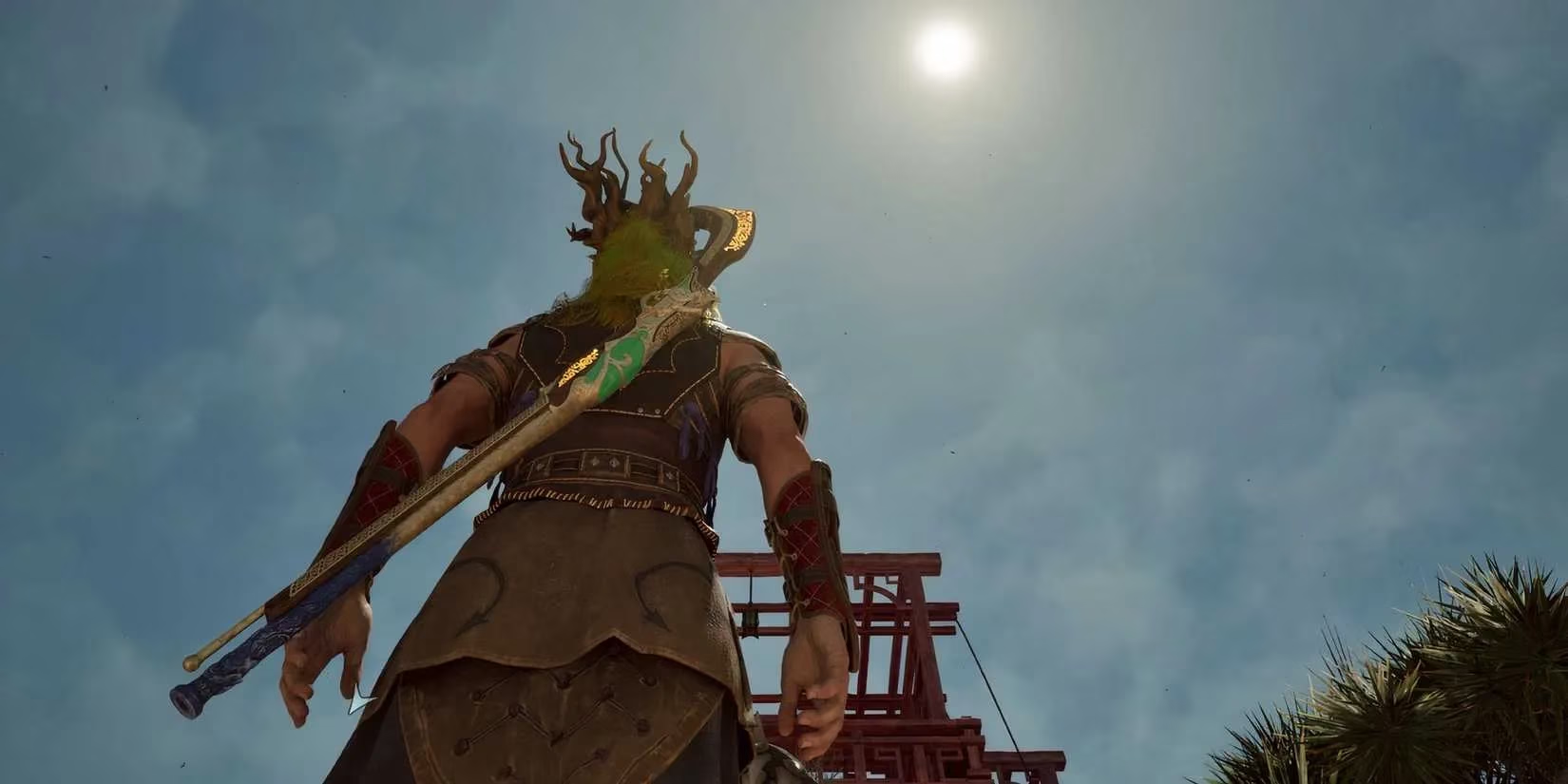
And that’s where the real pain kicks in—unrealistic expectations. When a game gets endlessly hyped as “the next Skyrim,” players start craving a very specific flavour: massive open world, endless side quests, cheese wheels rolling down hills. But then Avowed comes along and makes the brilliant decision to use a segmented map for stronger narrative beats, and suddenly a chunk of the audience is crying foul because they can’t wander off a cliff into a random cave whenever they want. I’ve seen games get roasted unfairly just because they dared to be their own thing instead of a carbon copy. Avowed caught some heat for not being exactly like Skyrim in certain ways, which is wild to me—I actually prefer Avowed’s tighter storytelling and meaningful choice impact. But the comparison game poisoned the well before anyone took a sip.
And here’s the uncomfortable truth we need to face in 2026: Skyrim isn’t even the gold standard it’s propped up to be. I’ve been playing that game off and on since 2011. I own it on three different platforms (don’t judge me), and I’ve logged over 50 hours on Steam alone—never mind my time on PS4 or the old Xbox 360. But you know what? I’ve never finished the main quest. Not once. The epic 25-hour saga of Alduin the World-Eater just can’t hold my attention, because the characters feel like cardboard exposition machines and the story is as generic as it gets. Compare that to Final Fantasy VII Rebirth, which I’ve already blasted through three times since it dropped in 2024. Those 50+ hours fly by because Cloud and the crew feel alive, the drama hits hard, and the narrative actually means something. Skyrim’s “choices” are mostly a joke, too—side with Empire or Stormcloaks, and that’s about the only thing I remember. Meanwhile, the Mass Effect trilogy still haunts me with its Rachni Queen and Genophage decisions over a decade later.
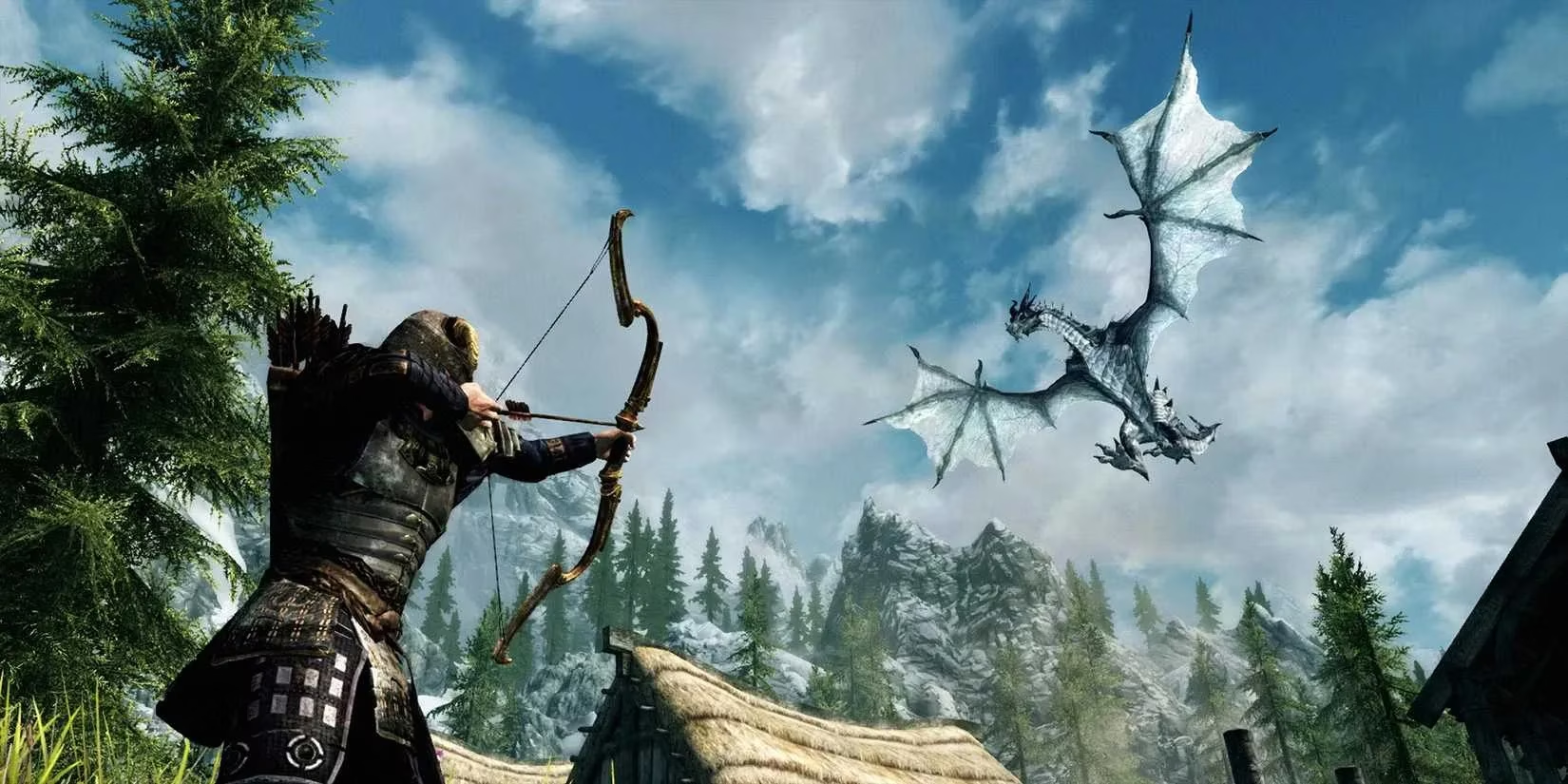
This isn’t about bashing Skyrim into the dirt. I’ve sunk countless evenings into its snowy wilderness, and I respect what it achieved. But using it as a lazy yardstick for every fantasy game does a massive disservice to creativity. It encourages developers to cling to tired formulas instead of innovating—imagine if Obsidian had felt forced to copy Bethesda’s open-world model instead of carving their own path with Avowed. We’d lose out on the magic that makes a game truly memorable.
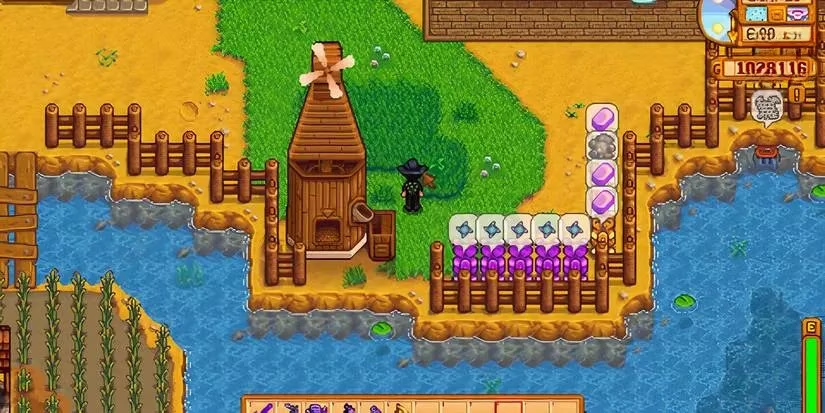
The same thing happens with Stardew Valley, by the way. Any game with pixel art now gets dragged into that cozy farming comparison, even when it’s got nothing to do with farming or life sims. When I hear “Stardew Valley-like,” I’m expecting lazy mornings watering crops and befriending townsfolk, not a gritty turn-based RPG or a medieval city-builder. It’s the graphics that fool people, and I think that’s just lazy shorthand.
So here’s my plea, straight from a gamer who’s tired of seeing fresh experiences get smothered by a decade-old legend: let’s retire the blanket Skyrim comparison. If a game is actually like Skyrim—open world, first-person fantasy RPG with real-time combat—then by all means, say that. But if you’re just trying to cash in on name recognition because the setting has castles and swords, maybe take a breath, think about what the game actually does, and describe it on its own terms. Otherwise, we’re setting up both players and devs for heartbreak, and that’s a glitch none of us need in our quest log.