In the warm, well-lit halls of cozy gaming, two names often echo with the reverence of ancient lore: Animal Crossing and Stardew Valley. These titans didn't just build homes; they built entire philosophies of relaxation, community, and pixel-perfect peace. For any new game daring to enter this hallowed space, the question isn't just about being cozy—it's about which giant's footsteps to follow. Enter Tales of the Shire: A Lord of the Rings Game, a charming life-sim set in the most idyllic corner of Middle-earth. While it wears its Hobbiton license with pride, its heart beats to a very specific, and brilliantly chosen, rhythm. It looked at the real-time clock of Animal Crossing and the tight, rewarding loops of Stardew Valley, and made a choice. A choice that, for any player wanting to actually play, was undoubtedly for the best.
⏰ The Ticking of the Shire's Clock
At the core of any life-simulation is time. How it flows defines everything: your stress levels, your sense of progress, and whether you feel like a benevolent village god or a harried chicken wrangler. Tales of the Shire made a pivotal decision here. An in-game day in the Shire lasts approximately 17 real-world minutes. This time is neatly sliced into five distinct, picturesque periods:
-
Dawn (You wake up halfway through it, because what Hobbit is truly an early bird?)
-
Morning
-
Afternoon
-
Evening
-
Night
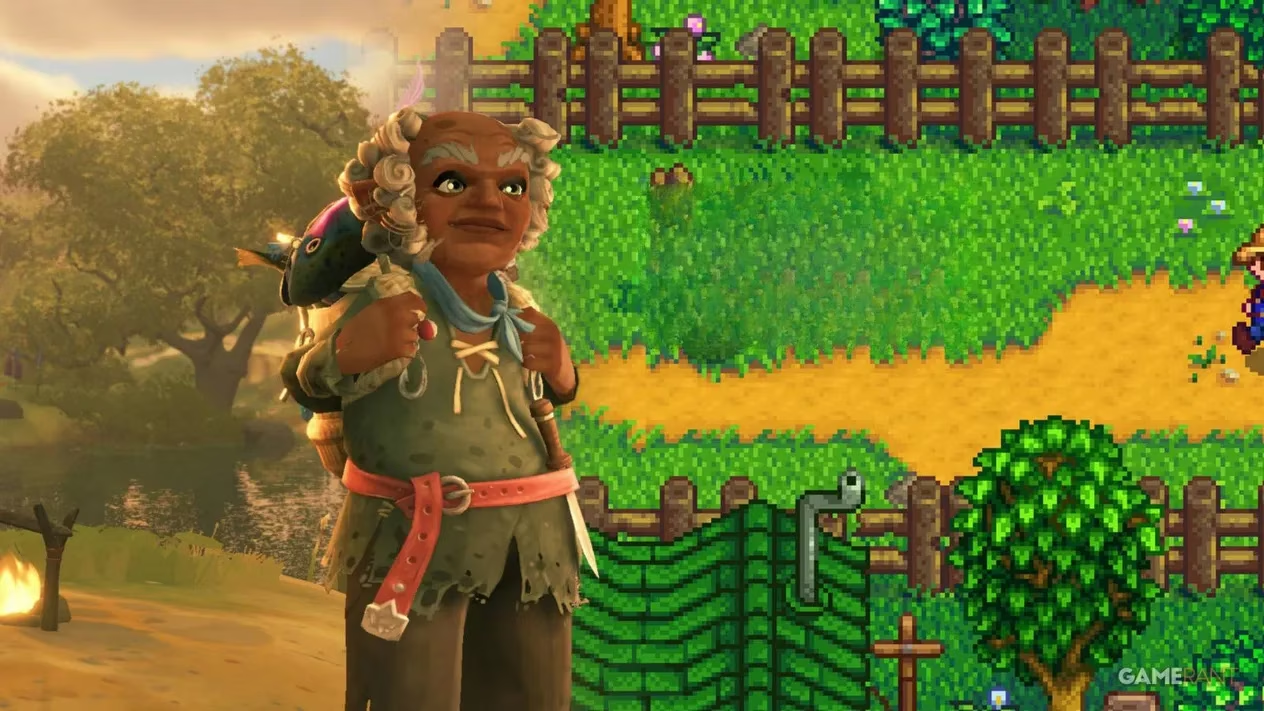
This structure is a direct nod to Pelican Town, not Tom Nook's island. Stardew Valley famously packs its drama, farming, and romance into about 13-minute days. The philosophy is simple: dense, actionable, repeatable cycles. You finish a day, you pass out, you load right back in with a new sunrise and new possibilities. Animal Crossing, in contrast, mirrors your real-world clock and timezone. To see tomorrow, you must literally live until tomorrow, or engage in some console-clock tomfoolery that feels vaguely like cheating on the universe.
🥔 Why Stardew's Speed is the Shire's Secret Weapon
On paper, 17 minutes might not sound like much. But in practice, it's a masterstroke of game design for Tales of the Shire. Let's break down why this borrowed tempo works so perfectly in a land of second breakfasts.
1. The Perfect Productivity Window:
Seventeen minutes is a golden slot. It's long enough to feel satisfyingly productive without becoming a slog. In one Shire-day, a player can comfortably:
| Activity | Time Estimate | Feeling Achieved |
|---|---|---|
| Water & tend to your garden patch | ~3-4 minutes | Wholesome accomplishment 🌱 |
| Chat with 2-3 neighbors, gift them a pie | ~4-5 minutes | Social butterfly unlocked 🧁 |
| Complete a multi-step fetch quest for the local guild | ~5-6 minutes | Heroic (but small) deed done ✅ |
| Go fishing by the river | ~3-4 minutes | Peaceful contemplation 🎣 |
That's a full, rewarding day! And if you don't finish everything? No sweat. One quick loading screen, and you're back at dawn, ready to pick up where you left off. The pressure is gentle, the progress is constant.
2. Avoiding the Real-Time Quagmire:
Here's where the genius really shines. Tales of the Shire has quests that require... waiting. A classic example is organizing a shared meal. You must invite villagers and wait for their RSVP, which often takes a full in-game day. Now, imagine this in Animal Crossing's real-time: You'd be blocked for 24 actual hours. 😱 While Animal Crossing fills that time with bug hunting and fossil finding, Tales of the Shire, frankly, doesn't have a decade's worth of content to make a full real-world day of waiting feel fun. Its activities—while delightful—are best enjoyed in concentrated bursts.
If the game forced real-time, players would quickly find themselves staring at Hobbit holes, tapping their feet, wondering if they should just go do their actual real-world chores instead. Not very cozy!
🏆 The Verdict: A Lesson Well Learned
By adopting the Stardew Valley model, Tales of the Shire does more than just show respect to a predecessor; it demonstrates a keen understanding of player agency and satisfaction. It prioritizes the player's desire to play and progress during a single gaming session. The loop is tight, rewarding, and respects your time. You can achieve meaningful goals, see the world change slightly, and deepen relationships without the game ever putting up a literal "Come Back Tomorrow" sign.
In the end, Tales of the Shire proves that the right inspiration isn't about copying—it's about adapting the smartest mechanics to your own world. It took Stardew Valley's perfectly paced clock, wound it with Hobbiton's serenity, and created a daily rhythm that feels both beautifully familiar and wonderfully its own. It's a choice that ensures your adventure in the Shire is always moving forward, one perfectly-paced, 17-minute day at a time. After all, even the longest journey—including the journey to level up your gardening skill—begins with a single, well-timed step.