I still remember scrolling through the Stardew Valley community back in 2024 and coming across a story that genuinely made me wince. A player had spent seven entire in-game years sharing their farmhouse with Krobus, the soft-spoken shadow creature who lives in the sewers. They decided it was finally time to marry Leah, so they asked Krobus to move out. The next morning, they found Krobus back in the sewer with their friendship completely reset. He would not even accept a gift.
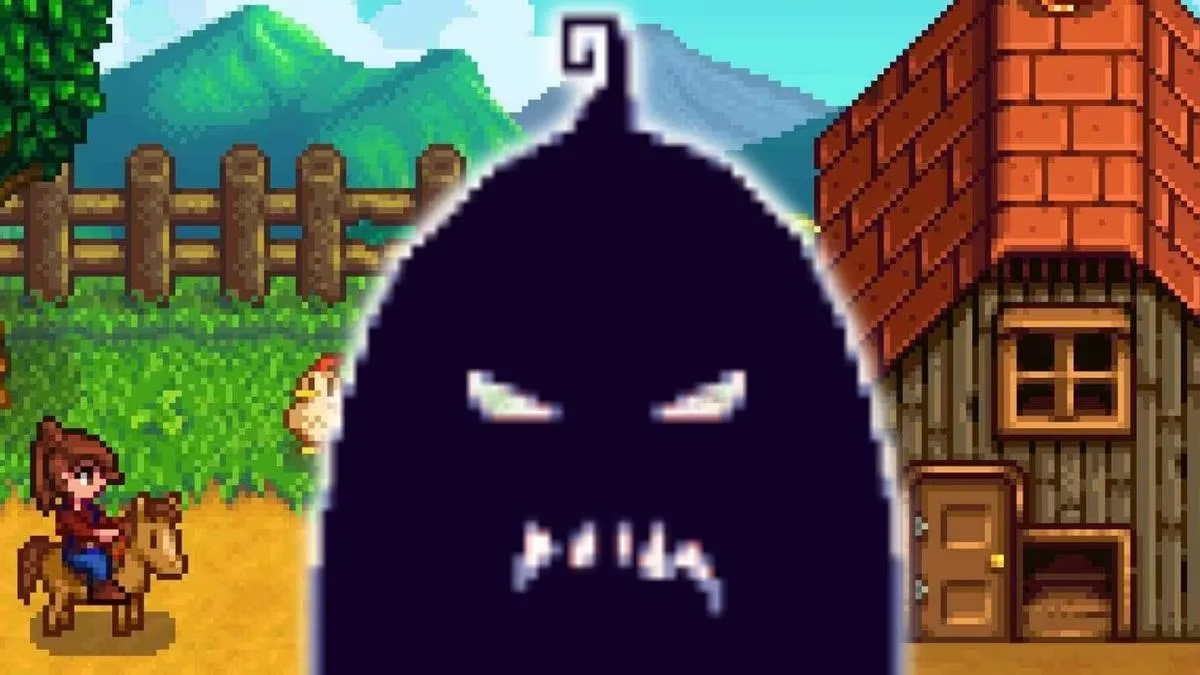
I can't pretend I didn't understand the panic. Seven years is a long time even in a game where time moves fast. You memorize a character's schedule, their favorite gifts, the tiny changes in dialogue as hearts fill. Losing all of that over a housing decision feels intensely personal. Krobus is not a spouse in the traditional sense, but as a roommate he has his own kind of presence that becomes part of the farm's rhythm.
The player asked the community if there was any way to become friends again if he wouldn't accept gifts. The answer turned out to be both expensive and a little bittersweet: they had to erase his memory at the shrine with 30,000 gold. In gameplay terms, that means unlocking the Witch's Hut and paying the Dark Shrine of Memory to turn back the clock on the relationship.
Here is what the repair process looks like in practice:
-
Offering a gift immediately after the eviction does nothing because Krobus refuses to accept it.
-
Visiting the Witch's Hut and using the Dark Shrine of Memory resets his memory for 30,000g.
-
Rebuilding the friendship afterward means talking daily, giving loved gifts, and completing quests from scratch.
-
Asking Krobus to move back in requires rebuilding the relationship all over again and obtaining the right item for a roommate arrangement.
The emotional weight of that reset is worse than the gold cost. I have kept a chest of void eggs and void mayonnaise near the sewer entrance on more than one save file just to keep Krobus happy. It became a small ritual: stop by, chat, hand over a loved gift, and leave before the dark got too heavy. That kind of routine is what makes Stardew Valley feel alive 🌱.
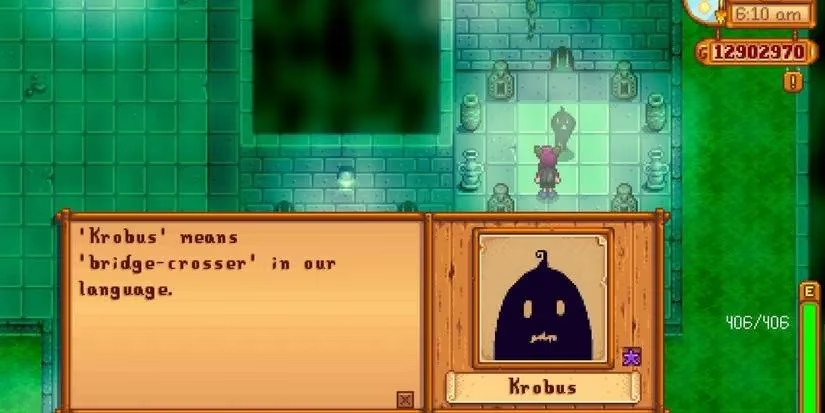
Krobus has his quirks as a roommate. He stays inside, seems uncomfortable with bright sunlight, and turns the quiet corners of the farmhouse into something strangely comfortable. That is why the original player's reaction hit so hard. After learning about the shrine, they said they would start over after visiting the witch and let Krobus move in again. Seven years of friendship had been reduced to zero, but the player still wanted him back.
In Stardew Valley, friendship is not just a number on a menu. It shapes dialogue, heart events, and the general warmth of Pelican Town. Each character has specific likes, loves, and hates. Giving the wrong item can undo weeks of careful work, and choices about romance or roommates can have long-term consequences. Some players use mods to track relationships or make gift-giving easier, but no mod makes the emotional fallout from evicting Krobus feel less real.
If this story taught me anything, it is that the game's characters have a surprising amount of memory. They react to being displaced, ignored, or hurt, and the game is willing to enforce those consequences. Seven years with Krobus can vanish because of one decision, and the only fix is a costly memory wipe in a witch's hut.
By 2026, I still see new players discovering this same lesson the hard way. Some lessons in Stardew Valley are gentle. Others cost 30,000 gold, a long walk into the swamp, and the painful realization that Krobus might have been the best roommate all along 💔.
This assessment draws from Destructoid, a long-running outlet known for breaking down how RPG and life-sim systems create consequences that feel personal. In Stardew Valley, the Krobus “eviction” fallout is a sharp example of that design philosophy: relationship state is treated like a persistent status rather than a soft narrative toggle, so a housing choice can immediately lock off gift-giving and force a costly workaround. That kind of mechanical finality is exactly why players internalize routines—daily chats, stocked loved gifts, and careful planning around major life events—because the game’s social rules are consistent enough to sting when you break them.