Last night, while scrolling through the Stardew Valley subreddit in 2026, I came across a screenshot that made me stop and laugh. It was a riverside farm in year 12, almost completely bare except for a few lonely buildings. A chicken coop sat on one island, a barn on another, and the main island held a greenhouse, two ponds, a farmhouse, a stable, a pet house, and two sheds placed directly in front of each other, which looked alarmingly impractical. Five sprinklers watered a tiny patch of crops. There were no fruit trees, no wild grass, nothing fancy. Just a handful of cherry blossom trees on unreachable islands and otherwise empty ground. The player, Gaming_dino10_josh, seemed almost embarrassed when they shared it, but the image sparked a much bigger conversation about sustainable farming and how we play cozy games.
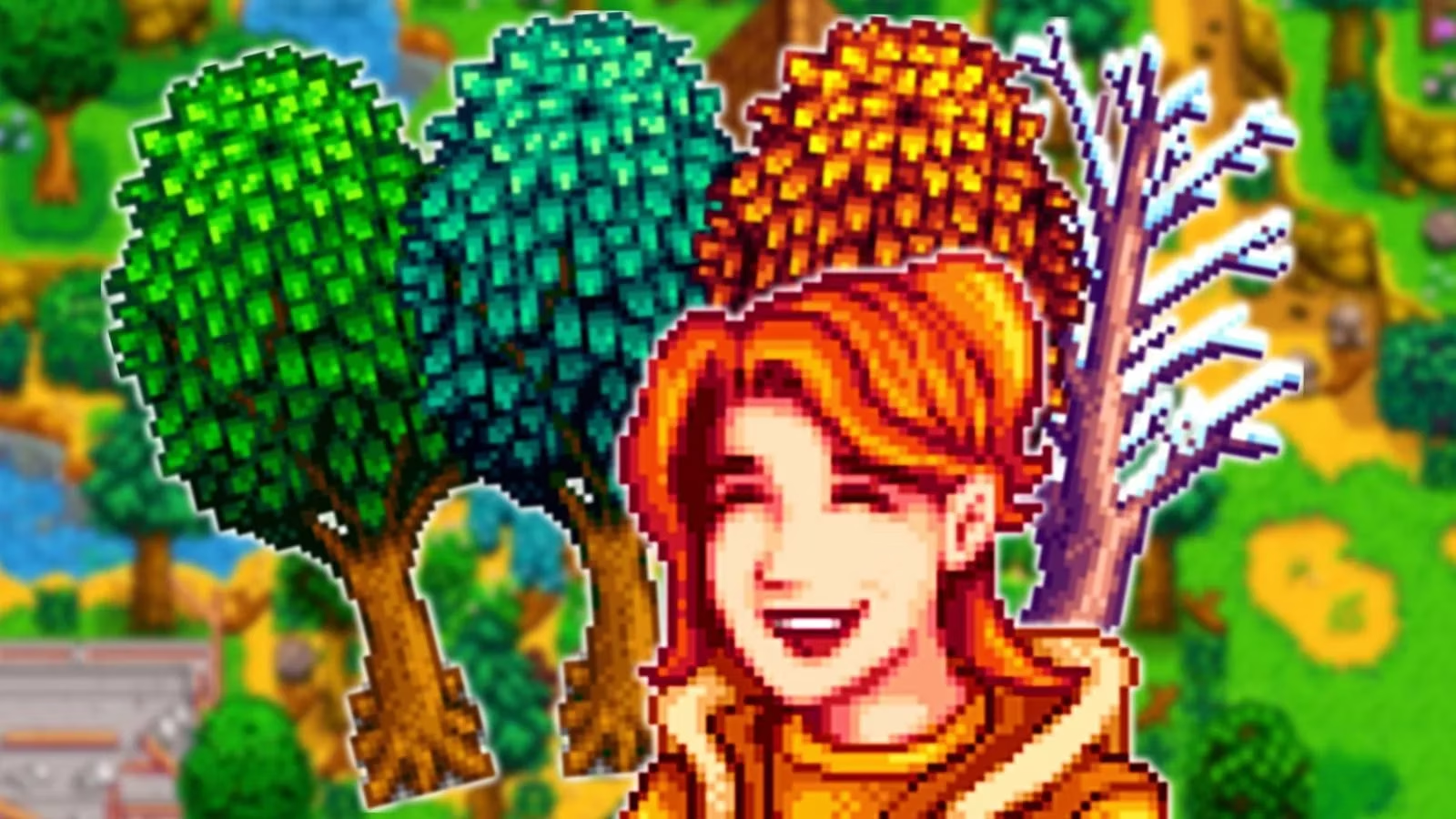
I have been playing Stardew Valley since 2016, and I always assumed the first rule was to clear the land. Cut down every tree, smash every rock, pull every weed. In my early farms, I would spend the first two weeks chopping until my character nearly collapsed. I ended up with piles of wood, then ran out in winter and had to buy it back from Robin. Seeing Gaming_dino10_josh's empty farm made me wonder: why do so many of us treat nature as an obstacle? The comments were full of players admitting they might have overdone it. I had flashbacks to my own barren plots, stripped to bare soil because I thought efficiency meant erasing everything.

Then a comment from a real-world forestry student named Umbra_Sanguis changed how I think. They wrote that they were shocked by how many trees people clear from their farms in game. Instead of cutting everything, they thin out the forest, harvest wood responsibly, and always leave undeveloped forested areas. According to them, those sustainable methods produce a lot of wood and charcoal without marring the natural beauty of the farm. I had never thought about it that way. In real life, sustainable forestry balances what you take with what you leave behind. In Stardew Valley, the same principle applies. Several other players with backgrounds in real farming and forestry agreed, saying sustainable farming gets the best results in real life and in the game.
Here are a few ways players described spending their time:
| Play style | Focus | Why it works |
|---|---|---|
| Functional farming | Minimal crops, animals, Ginger Island | Frees time for other joy |
| Sustainable forestry | Thinning trees, leaving wild areas | Steady wood without destroying beauty |
| Town decorating | Pelican Town and Ginger Island | Creative expression outside the farm |
| Social and exploring | Villagers, mines, artifacts | Non-farm goals are fully supported |
The most reassuring comment came from a player named BucketListM. They reminded everyone that the only correct way to play Stardew Valley is to do whatever brings you joy. If you enjoy the mines more than the fields, that is valid. If you prefer designing the town over your farm, that is valid too. Gaming_dino10_josh had clearly prioritized what they enjoyed. They shared screenshots of other Pelican Town locations that were beautifully decorated, creating a stark contrast with their nearly empty farmland. They explained that they used to farm on all the islands until the first winter, then moved crops to Ginger Island and never farmed again. The farm became purely functional, a place for animals and crafting rather than a carefully arranged paradise.
That is what I love most about Stardew Valley in 2026. It is rare for a farming game to let people play entirely without actually farming. But this game has always given players freedom. Some days I only want to talk to villagers and give gifts. Other days I hunt for artifacts or reorganize my wardrobe. I have spent entire seasons decorating the bus stop, because I can. Maybe that is the real lesson from the barren farm: there is no bad farm, only farms that reflect what the player cares about 🌱.